Work I do personally, with a journalist's eye, a translator's precision and Cabinet-level judgment. Never outsourced, never machine-made.
Machine translation is fine for getting the gist of an internal email, but the moment the words carry risk or carry your name, it isn't. For a safety datasheet, a lab report, a technical manual or a regulatory file, a plausible-looking mistake is expensive — and AI makes them confidently, with no idea it has done so. And for anything meant to persuade — a campaign, a website, a press release, a brand's voice — a machine can carry the words across but not the meaning: the nuance, the humour, the cultural cue that makes a reader actually feel something. If a text will be read by a customer, a regulator or a journalist, and you will be judged on it, it is worth a human who understands both your field and the culture it has to land in. That is the work I do.
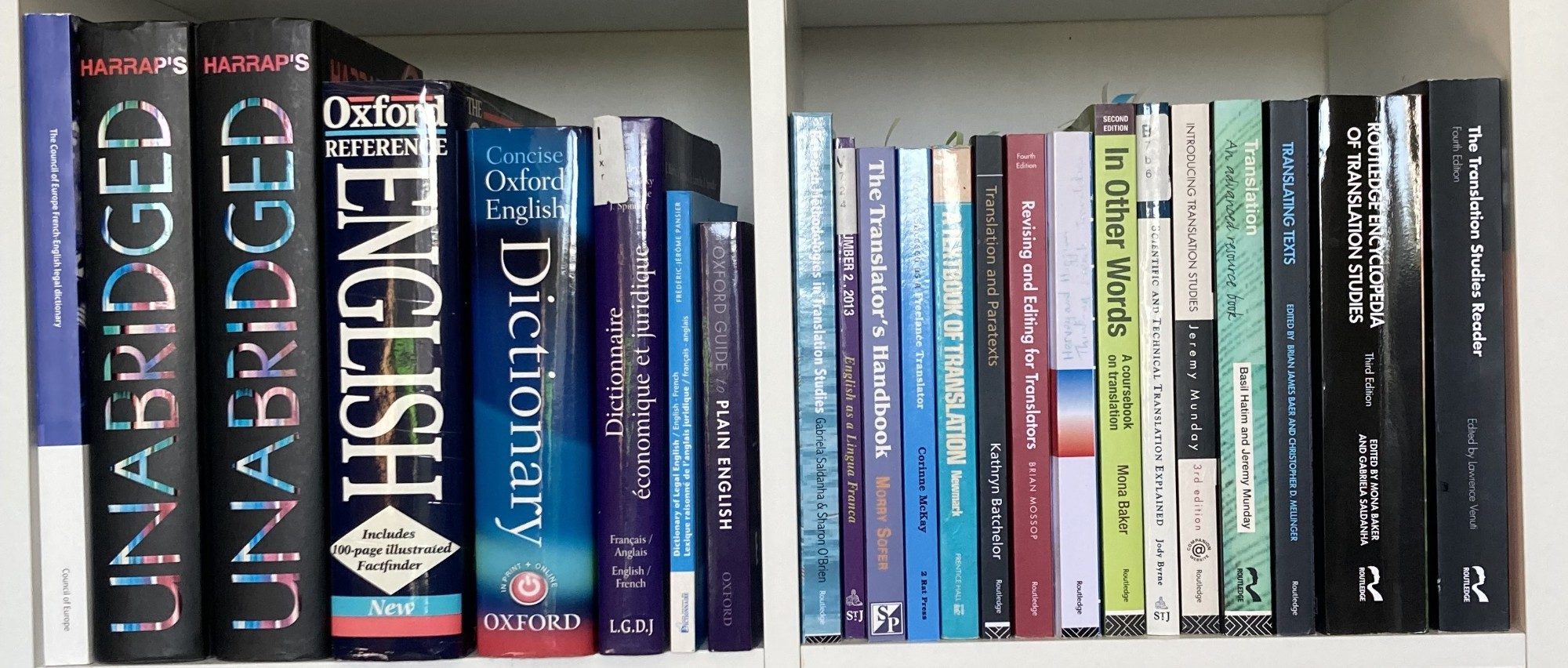
French or Irish → English, delivered by a native English speaker with an MA in Translation Studies (Distinction). This is translation for the texts that matter: the ones where even a small error is expensive. Sectors: chemical surface treatment and industrial documentation, corporate and marketing texts, government and policy, tourism and hospitality. Today, I translate into English only — the industry's professional standard, and your quality guarantee.
Whether you're an English-speaking company receiving documents from France that you need to understand beyond any doubt, or a French business that needs to convince in English, the standard is the same: English that carries your meaning, with nothing left to doubt.
Transcreation begins where translation reaches its limit. For advertising, slogans, campaigns and brand content — where fidelity to the source would blunt the message — I move beyond the words to recreate it for the audience you're addressing: adapting cultural references, cutting what a reader already knows and explaining what they don't, chasing the response rather than the sentence. Often the starting point is a brief, not a source text at all.
One word on a common misconception: transcreation is not loose translation, the option for people who can't get it exactly right. It is the opposite. You can only move away from a text once you are able to render it precisely — knowing which liberties serve the message, and which betray it, takes years of experience producing the exacting work. This is a senior translator's work, not a shortcut.
You have news; I make it read like news. Working from your brief or your existing draft, I find the angle, structure the release the way newsrooms expect, strip the jargon and write quotes a journalist can print. Your team handles distribution and press contacts; what I guarantee is that the material you send deserves to be picked up.